

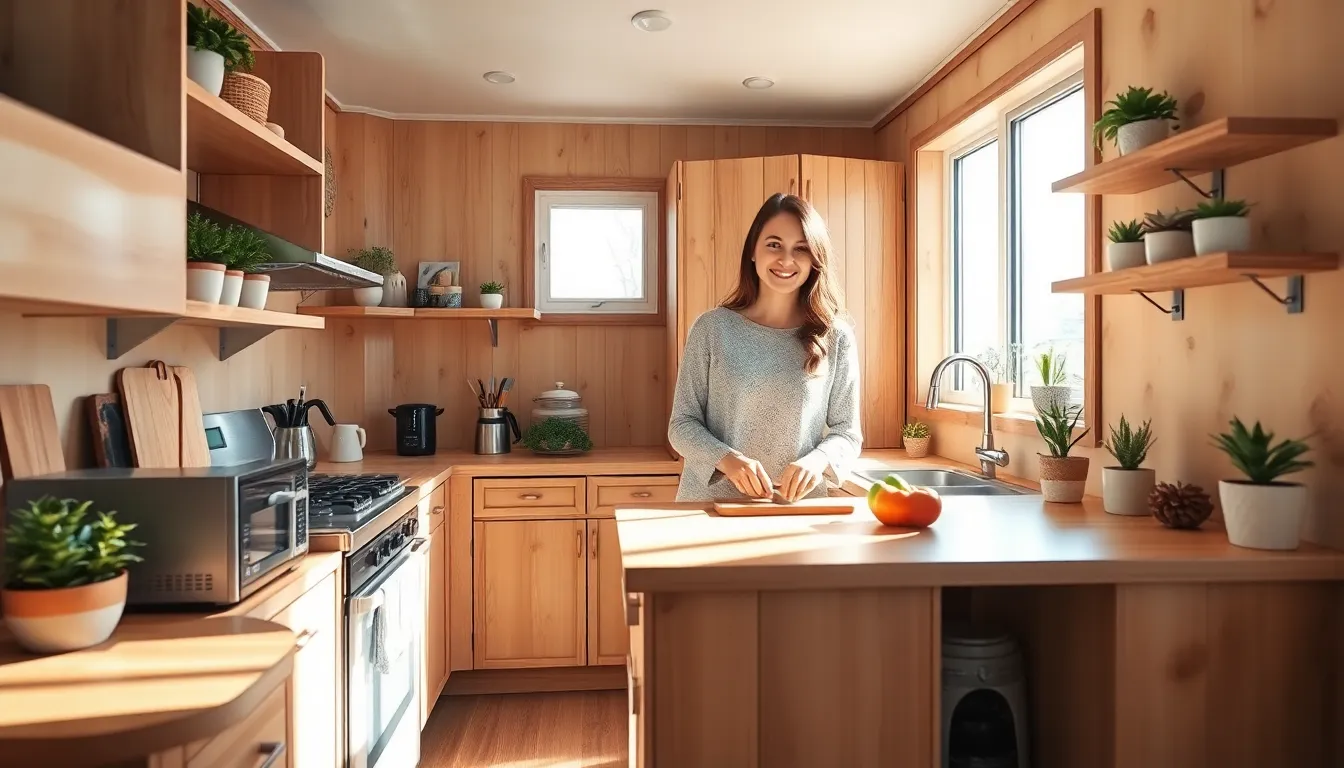
In a world where bigger often seems better, tiny homes are flipping the script. They’re proving that less really can be more, especially when it comes to kitchen design. After all, who needs a sprawling kitchen when you can whip up gourmet meals in a space that’s cozier than your favorite coffee shop?
Tiny home kitchens are not just about functionality; they’re a canvas for creativity. With clever storage solutions and innovative layouts, these pint-sized cooking spaces can dazzle even the most skeptical chef. Whether it’s a foldable table that doubles as a prep station or magnetic spice racks that save precious counter space, the possibilities are endless. Get ready to explore some fantastic tiny home kitchen ideas that will have you cooking up a storm while keeping your space stylish and efficient.
Tiny Home Kitchen Ideas
Maximizing vertical space creates storage opportunities in tiny home kitchens. Installing shelves above countertops provides a place for spices, small appliances, or decorative items. Incorporating pull-out drawers under the counter ensures easy access to pots and pans while keeping them organized.
Utilizing multipurpose furniture enhances functionality. Consider a kitchen island that serves as a prep space and dining area or a foldable table that expands when needed. These options create flexible spaces without overcrowding the kitchen.
Choosing compact appliances simplifies cooking in a tiny home. Opt for a microwave-convection oven combo that saves space while offering versatile cooking options. A countertop induction cooktop provides an energy-efficient method for meal preparation without taking up much room.
Incorporating open shelving promotes an airy feel. Shelves allow for easy visibility and accessibility, making items easy to grab during cooking. Displaying colorful dishware or plants adds personality and charm to the kitchen environment.
Integrating a kitchen backsplash not only adds style but also protects walls. Use peel-and-stick tiles or waterproof paint for effortless maintenance. Personalizing this area with bold patterns can also tie the entire kitchen together visually.
Designing a compact pantry ensures organization in small kitchens. Use clear storage bins or stackable containers to maximize space. Organizing supplies by type or frequency of use enhances efficiency during cooking.
Emphasizing natural light brightens the kitchen space. Installing large windows or skylights creates an illusion of depth while reducing the need for artificial lighting. Bright colors for cabinetry or walls will also amplify light reflection, making the kitchen feel larger.
Maximizing Space
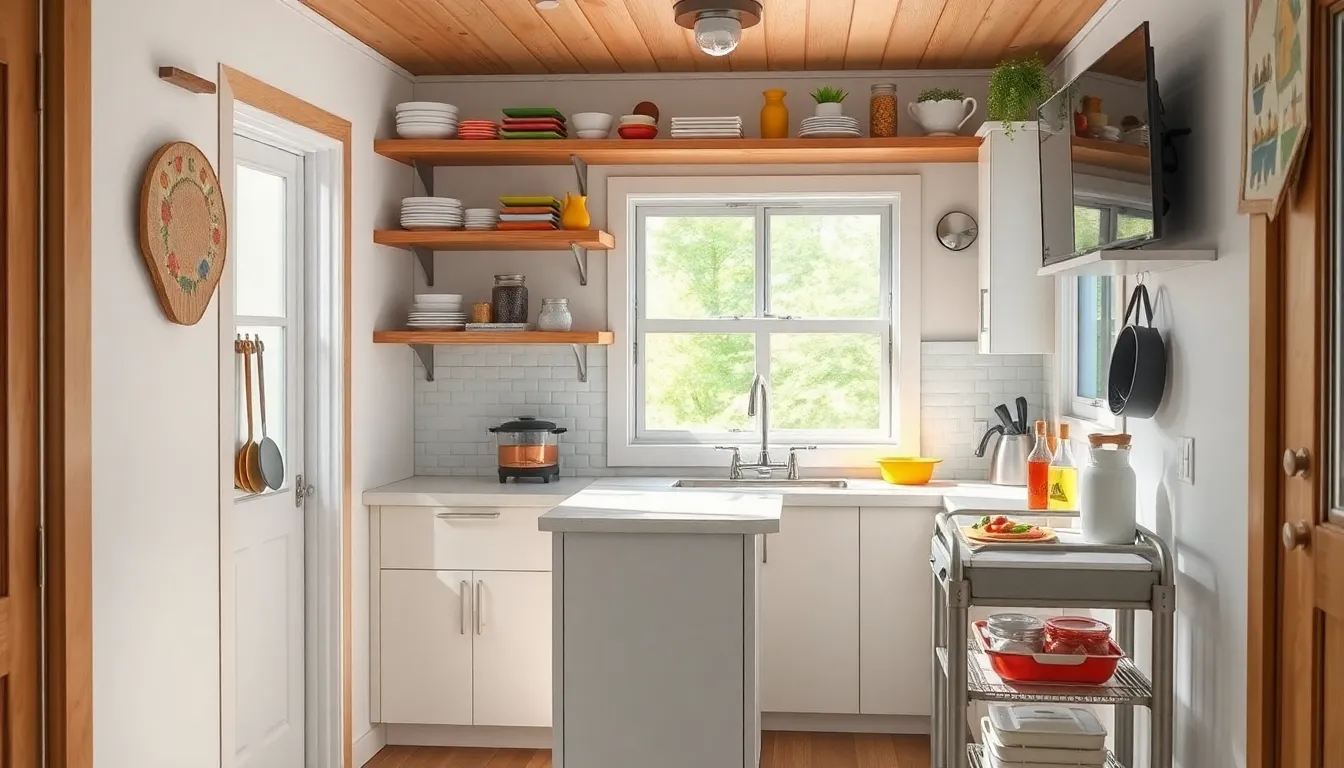
Tiny home kitchens require creative solutions for optimal space use. Implementing smart storage and multi-functional furniture elevates functionality without sacrificing style.
Smart Storage Solutions
Utilizing vertical storage enhances kitchen organization. Wall-mounted shelves provide easy access to frequently used items while keeping countertops clutter-free. Incorporating pegboards allows for hanging utensils, further maximizing wall space. Using magnetic strips can secure metal tools, freeing drawer space for larger items. Compact drawer organizers store small kitchen appliances efficiently, ensuring they remain accessible yet out of the way. Clear storage bins in a compact pantry promote visibility and quick access to ingredients, maintaining an orderly environment.
Multi-Functional Furniture
Investing in multi-functional furniture optimizes tiny kitchen space. Kitchen islands can serve as both prep areas and dining solutions, allowing families to gather without additional tables. Folding tables can expand meal space without permanently occupying valuable floor area. Choosing stools that tuck beneath counters maximizes seating while minimizing obstruction. Portable carts act as extra storage and can be maneuvered when needed, providing versatility in tiny kitchens. Modular furniture options adapt to changing needs, making the space more versatile and functional over time.
Balancing Style and Function
Modern fire retardant curtains are available in a wide range of styles, colors, and materials. From sleek minimalist looks that suit urban apartments to warm, textured fabrics perfect for rustic homes, they blend seamlessly into any décor. Homeowners can now prioritize safety without sacrificing aesthetic appeal.
Even commercial spaces such as hotels, offices, and schools are increasingly adopting them to comply with safety regulations and create welcoming environments. Resources like Architectural Digest often emphasize how safety-driven design choices can still look luxurious and timeless.
Design and Aesthetics
Tiny home kitchens blend functionality with style. Thoughtful design can transform limited space into an inviting cooking area.
Color Schemes and Materials
Light color palettes enhance the perception of space. Soft whites, light grays, and pale blues create an airy feel in tiny kitchens. Natural materials add warmth and texture; consider bamboo, reclaimed wood, or stone countertops. Textured surfaces elevate aesthetics without overcrowding. Accents in darker hues contribute depth; navy blue cabinets or charcoal gray walls make a striking contrast. Durable materials, such as quartz or stainless steel, withstand daily use and maintain visual appeal. Incorporate pops of color in accessories to personalize the space while keeping the overall scheme cohesive.
Lighting Choices
Effective lighting transforms the mood of a kitchen. Ambient lighting offers overall brightness, while task lighting, such as under-cabinet lights, illuminates work surfaces. Pendant lights over kitchen islands add focal points and style. Natural light maximizes the openness of tiny kitchens; large windows let sunlight flood in. Skylights are excellent for bringing in daylight without sacrificing wall space. Layered lighting creates versatility; combining overhead lights with natural and task lighting adjusts the ambiance for different occasions. Dimmable options allow for customizable brightness, catering to various cooking needs and social events.
Functionality in Tiny Kitchens
Tiny kitchens thrive on functionality. Every element contributes to efficient cooking and easy movement within limited space.
Efficient Layouts
Efficient layouts maximize small kitchen areas. Arrange the sink, stove, and refrigerator in a triangular formation to create an effective workflow. Utilize corners with L-shaped or U-shaped designs, enhancing accessibility to all cooking essentials. Mobile islands provide additional prep space and can serve multiple functions, like dining or storage. Incorporate open shelving to keep frequently used items within reach while maintaining an airy feel. Consider fold-down tables that can expand for entertaining and tuck away when not in use, allowing for flexibility in small settings.
Essential Appliances
Essential appliances play a crucial role in tiny kitchens. Compact models like microwave-convection ovens save space and combine functionalities. Induction cooktops offer quick heating on a small footprint, freeing counter space for food prep. Dishwashers designed for tiny homes fit under counters and streamline cleanup without crowding. Invest in multi-functional tools, such as immersion blenders or food processors, to reduce clutter while expanding culinary options. Minimize appliance sizes to ensure room for essential cooking tools, making it easier to create gourmet meals in limited space.
Tips for a Cozy Atmosphere
Creating a cozy atmosphere in a tiny home kitchen adds warmth and comfort, making cooking more enjoyable. Implementing thoughtful design elements enhances both functionality and aesthetic appeal.
Personal Touches
Incorporating personal touches transforms a kitchen into a unique space. Displaying curated decor items like colorful dishware or handmade pottery adds character. Art on the walls, whether it’s a gallery of food-related prints or personalized signage, contributes a sense of identity. Small potted plants not only provide freshness but also create a lively environment. Utilizing textiles, such as cheerful curtains or a cozy rug, introduces texture and warmth. These details create a welcoming atmosphere that reflects individual style.
Outdoor Integration
Integrating the outdoors into a tiny home kitchen enhances its openness. Large windows or sliding glass doors invite natural light and offer views of the surrounding landscape. A small herb garden on the windowsill or balcony connects the kitchen to nature. Installing a folding dining table outside extends the cooking space for al fresco meals. Outdoor materials, such as bistro-style seating or natural wood accents, blend the indoor and outdoor aesthetics. Creating accessibility to nature promotes a serene cooking experience while expanding overall living space.
Conclusion
Tiny home kitchens prove that limited space doesn’t have to limit creativity or functionality. With innovative storage solutions and smart layouts, these kitchens can become efficient cooking hubs. The right design elements enhance both the aesthetic and practical aspects, allowing for a cozy atmosphere that reflects personal style.
By incorporating multi-functional furniture and compact appliances, tiny kitchens can adapt to various needs without sacrificing comfort. Thoughtful choices in color, lighting, and decor can transform these spaces into inviting environments. Embracing the tiny home kitchen trend offers a unique opportunity to enjoy gourmet cooking in a compact yet stylish setting.