

Healthy Indoor Humidity: How to Balance Moisture, Comfort, and Air Quality
Indoor humidity quietly shapes daily comfort in ways most people never notice—until something feels off. Dry skin in winter, a musty smell creeping up from the basement, windows fogging over after a shower: these are all signs that the moisture balance in a home has shifted. Relative humidity affects respiratory comfort, mold growth, dust mite activity, static electricity, and even how long wood furniture and flooring hold up over the years. Most guidance points to a general target range of 30% to 50% relative humidity, though the ideal level in any particular home depends on climate, season, ventilation, and the way the building itself is constructed. When air feels persistently dry, some people reach for a humidifier to add moisture back into a room, but measuring actual humidity levels first is far more reliable than guessing based on how things feel. The goal isn’t maximum moisture—it’s a balanced, measurable indoor environment.
Understanding Relative Humidity
What Relative Humidity Means
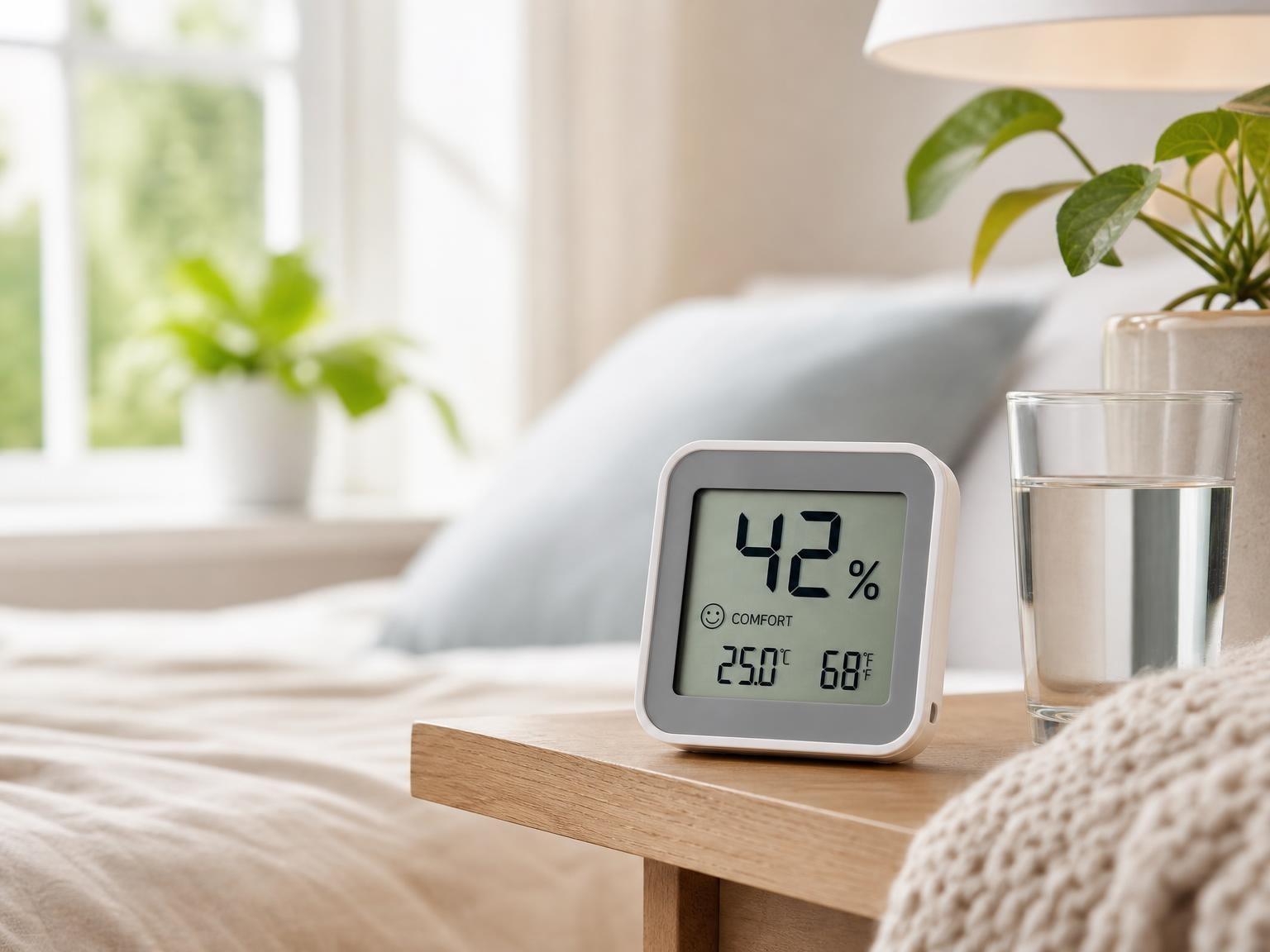
Relative humidity describes how much moisture the air is holding relative to the maximum it could hold at a given temperature. Warmer air can hold more water vapor than cooler air, which explains why the same amount of moisture can feel noticeably different depending on the indoor temperature. A simple hygrometer or digital humidity monitor—inexpensive and easy to find—gives an accurate reading instead of leaving you to guess based on how the air “feels.”
Why Balance Matters
Air that’s too dry can irritate skin, nasal passages, and throats, and it tends to ramp up static electricity. Too much moisture swings the problem the other way, raising the risk of condensation, mold, mildew, and dust mites. It’s worth noting that humidity control won’t fix every indoor air quality issue—problems like smoke, chemical pollutants, or poor ventilation need their own separate solutions.
Signs Your Home May Be Too Dry or Too Damp
Dry air often shows up as persistent static shocks, chapped skin, irritated eyes, cracking wood furniture, or gaps opening up between floorboards. Excess moisture tends to announce itself differently—condensation on windows or pipes, musty odors, visible mold, damp carpeting, or recurring water stains.
Because many of these symptoms can stem from unrelated causes, it’s worth confirming conditions with an actual humidity monitor rather than jumping to conclusions. Visible mold or chronic dampness—especially after a leak or flooding—usually calls for a professional assessment rather than a do-it-yourself fix.
Practical Ways to Control Indoor Humidity
Do this first: measure humidity in several rooms over a few days before changing anything. Levels often vary more than people expect between a bedroom, bathroom, basement, and kitchen.
When humidity runs high, better ventilation makes the biggest difference—running exhaust fans during and after cooking or showering, fixing plumbing leaks promptly, and skipping indoor laundry drying unless there’s good airflow. Keeping furniture away from cold exterior walls cuts down on condensation risk, and in consistently damp climates, a dehumidifier or air conditioner can help carry the load.
When humidity is too low, cutting down on drafts and avoiding overheated rooms helps, since warm air often feels drier even when it’s holding the same amount of moisture. Houseplants can raise local humidity modestly, though the effect depends on how many you have and what kind. A humidifier can help once dryness has been confirmed by measurement and the unit is matched to the room’s actual size and needs—always following the manufacturer’s instructions for placement and operation.
Safe Use of Moisture-Producing Appliances
Standing water inside any humidifier tank creates ideal conditions for bacteria and mold to grow, which is why regular cleaning matters so much. According to guidance from the U.S. Environmental Protection Agency and the Mayo Clinic, water reservoirs should be emptied, dried, and refilled with fresh water frequently, and tanks should be cleaned according to the manufacturer’s instructions. After cleaning with any disinfectant, a thorough rinse keeps those chemicals from dispersing into the air along with the mist. Filters, where present, should be replaced on schedule, and mineral deposits may build up over time depending on how hard the local water is.
Placement matters too: keep appliances on stable, water-resistant surfaces, away from walls, bedding, or electronics where mist could settle. Steam or heated-water humidifiers should be kept well away from children and pets, since hot water poses a real burn risk. Measure first, clean regularly, and stop if condensation appears on nearby surfaces—these three habits head off most common problems before they start. A humidifier should never be treated as a substitute for medical care or professional mold remediation.
Choosing the Right Response for Each Situation
|
Situation |
Appropriate First Step
|
|
Humidity below the recommended range |
Confirm the reading, then address drafts, heating, or controlled moisture addition |
|
Humidity within the recommended range |
Maintain ventilation and monitor seasonal changes |
|
Humidity consistently above the recommended range |
Increase ventilation, repair leaks, and consider dehumidification |
|
Visible mold or recurring dampness |
Identify and correct the moisture source |
|
Respiratory symptoms that persist |
Seek qualified medical advice rather than adjusting humidity alone |
The right response often depends on the room. A finished basement may need dehumidification even in an otherwise dry climate, while an upstairs bedroom heated all winter may need moisture added back in. Climate, insulation quality, and how many people occupy a space all factor into what’s actually needed.
Common Mistakes to Avoid
A handful of habits tend to undercut otherwise reasonable humidity management: adjusting moisture levels purely by how the air feels, running a humidifier nonstop without ever checking actual readings, ignoring window condensation, letting water sit in a tank for days at a time, adding fragrances or oils not approved by the manufacturer, and assuming any appliance can remove existing mold or repair water damage on its own.
A Practical Example
Consider a bedroom that feels uncomfortably dry every winter. Measuring the air first—rather than assuming—confirms humidity sitting near 25%. A small humidifier, placed safely and cleaned weekly, gradually brings the room into the 30–40% range, with monitoring continuing through the season. Contrast that with a basement showing a musty smell and faint condensation on the pipes: here the issue is excess moisture, not dryness, and the right response is better ventilation and a dehumidifier rather than any moisture-adding device.
Frequently Asked Questions
How can indoor humidity be measured? A hygrometer or digital humidity monitor, placed away from direct airflow or sunlight, gives a reliable reading within minutes.
What does condensation indicate? It typically signals that indoor humidity is higher than the surrounding surface temperature can support, which often points toward a ventilation or moisture-source issue.
How often should a humidifier be cleaned? Most manufacturer guidance recommends cleaning every few days to weekly, with daily water changes in the tank.
When should persistent dampness be professionally assessed? Any recurring moisture, musty odor, or visible mold that doesn’t clear up with improved ventilation should prompt a qualified inspection, particularly after flooding or leaks.
Final Perspective
Healthy humidity is controlled humidity—measure it, adjust gradually, and prevent excess moisture. The 30–50% range offers a practical guide, not a guarantee of flawless air quality, and individual circumstances—respiratory conditions, young children, or past water damage—may call for more tailored advice. Start by measuring the rooms used most often, trace any imbalance back to its source, and make gradual adjustments while keeping an eye out for condensation, odors, or recurring dampness.