


When summer hits and the heat’s cranked up, nothing feels better than stepping into a cool oasis. For mobile homeowners, finding the right AC unit can feel like searching for a needle in a haystack. But fear not! With the right information, you can transform your cozy space into a refreshing retreat without breaking the bank or your sanity.
Imagine kicking back in your favorite chair, sipping a cold drink while the sweltering sun blazes outside. Choosing the perfect AC unit for your mobile home doesn’t have to be daunting. With a little guidance, you’ll be well on your way to enjoying a cool breeze that makes even the hottest days feel like a walk in the park. Let’s dive into the world of mobile home air conditioning and discover how to keep your cool, no matter how hot it gets outside.
AC Units for Mobile Home
Mobile homes require specific air conditioning solutions to efficiently manage indoor temperatures during hot months. Several types of AC units cater to these unique needs. Central air conditioning units provide whole-home cooling but may demand significant installation work and energy use.
Ductless mini-split systems offer flexibility with their ability to cool individual rooms. They consist of an indoor unit, which can be easily installed, and an outdoor condenser. Portable air conditioners serve as another option, allowing users to move them between rooms. While not as efficient as central or ductless systems, their mobility appeals to many.
Window units present a practical choice for cooling smaller spaces. These units fit snugly in open windows and function well in moderate climates. Each option has distinct pros and cons, so understanding them aids in making informed decisions.
Cooling capacity plays a critical role when selecting an AC unit. The British Thermal Unit (BTU) rating indicates the cooling power of the unit. A typical mobile home might require units ranging from 5,000 to 15,000 BTUs, depending on square footage and insulation.
Energy efficiency represents another key consideration. The Seasonal Energy Efficiency Ratio (SEER) rating functions as a measure of how efficiently an AC unit uses electricity. Units with higher SEER ratings typically reduce energy consumption and lower utility bills.
Mobile homeowners benefit from evaluating their specific needs. Factors like local climate, home size, and budget inform the selection process. By prioritizing efficiency and suitability, finding the right AC unit enhances comfort during summer.
Types of AC Units
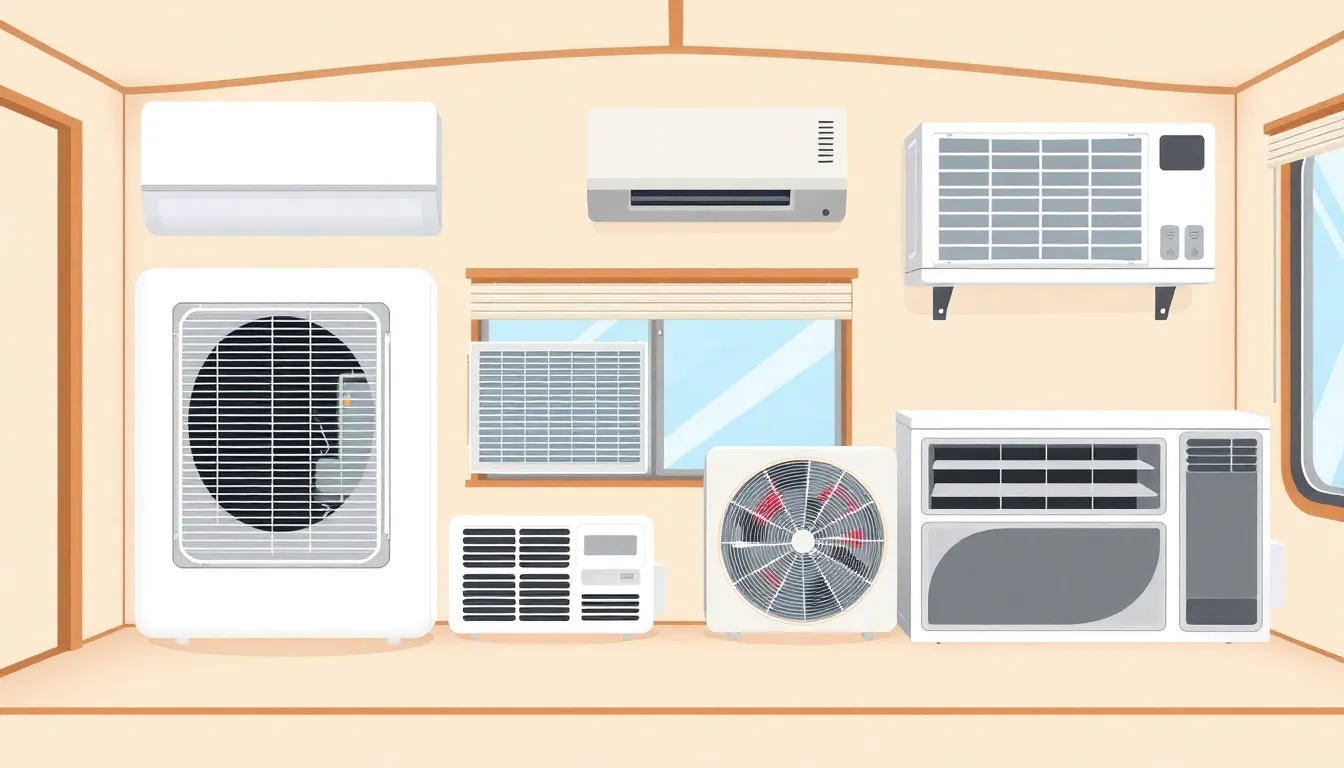
Several types of AC units cater to different needs in mobile homes. Understanding these options helps homeowners make informed decisions about indoor comfort.
Central Air Conditioning
Central air conditioning provides whole-home cooling through a series of ducts. This type of system is efficient for larger spaces and can maintain a consistent temperature throughout the home. Installation might require ductwork, which adds to upfront costs. Central units typically range from 14,000 to 25,000 BTUs, depending on the home size. Energy efficiency ratings like SEER are crucial for reducing utility bills. Choosing a central system often emphasizes comfort and convenience, especially in regions with extreme heat.
Window Units
Window units are compact and generally easy to install. They sit directly in a window and cool a single room effectively. This type is particularly suitable for smaller mobile homes or spaces that don’t require extensive cooling. Window AC units typically operate within a range of 5,000 to 12,000 BTUs. Energy-efficient models can minimize electricity consumption, especially during hot months. These units offer a practical solution for those seeking economical cooling options without extensive modifications.
Portable Units
Portable units offer flexibility to mobile homeowners by enabling easy movement from room to room. This type of AC usually comes with wheels and exhaust kits for window installation. Cooling capacity varies, typically providing between 8,000 and 14,000 BTUs. Their adaptability makes them suitable for temporary cooling and small spaces. Energy efficiency is important with portable units, so selecting a model with a high SEER rating can lead to savings. They are ideal for those who want a simple solution for localized cooling without permanent installation.
Key Features to Consider
When selecting an AC unit for a mobile home, several key features influence performance and comfort. Understanding these elements helps homeowners make informed choices.
Energy Efficiency Ratings
Energy efficiency ratings significantly impact long-term costs. The Seasonal Energy Efficiency Ratio (SEER) measures how effectively an AC unit uses electricity. Units with a SEER rating of 14 or higher offer better efficiency and can lead to lower energy bills. Choosing a model with a higher rating not only conserves energy but also contributes to environmental sustainability. Homeowners should examine SEER ratings in conjunction with local energy prices to assess overall savings.
Size and Capacity
The size and capacity of the AC unit determine its cooling effectiveness. British Thermal Units (BTUs) express cooling power, with typical mobile homes requiring units that range between 5,000 to 15,000 BTUs based on square footage and insulation. A unit’s capacity directly affects its ability to cool a space comfortably. Homeowners must measure their living area to select an appropriately powered unit that meets specific cooling demands. Oversized or undersized units can lead to inefficient energy use and discomfort.
Noise Levels
Noise levels of an AC unit affect the living environment quality. Portable and window units often operate at varying decibel levels, with quieter models producing around 50 decibels, while louder units may exceed 70 decibels. Choosing a unit with lower noise emissions ensures a more pleasant atmosphere, particularly in smaller spaces. Homeowners should consider the noise level when making their selection to avoid disruptive sounds during operation.
Installation and Maintenance
Installation and maintenance of AC units for mobile homes play crucial roles in ensuring comfort and efficiency. Proper attention to these aspects can lead to improved indoor air quality and lower energy costs.
DIY Installation Tips
Consider measuring the window or area where the unit will be installed. Homeowners can select an appropriate AC unit size based on these measurements. Gathering essential tools like a screwdriver and a level can simplify the installation process. Following the manufacturer’s instructions ensures correct setup, while checking for proper sealing helps prevent air leaks. Prioritizing safety, one should turn off the power during installation to avoid electrical issues. Once installed, testing the unit’s functionality will confirm an effective setup.
Professional Installation Benefits
Hiring professionals for AC installation offers multiple advantages. Experts possess the technical knowledge and experience to handle potential challenges. They can ensure the unit operates at maximum efficiency, which can lower future energy costs. Professional installation often includes proper sealing and insulation, resulting in improved cooling performance. Insurance coverage is another benefit, as some contractors offer warranties on their work, providing added peace of mind. Ultimately, professionals can save homeowners time and potential frustration.
Regular Maintenance Practices
Implementing regular maintenance practices helps prolong the lifespan of air conditioning units. Checking and replacing filters every one to three months is vital for maintaining air quality. Cleaning the unit’s exterior and interior components, including coils and fins, prevents buildup and promotes efficiency. Scheduling annual professional inspections allows technicians to identify potential issues before they escalate. Homeowners should also clear any debris from around the outdoor unit, which ensures proper airflow. Following these practices keeps the AC unit functioning optimally and minimizes energy consumption.
Conclusion
Choosing the right AC unit for a mobile home is essential for maintaining comfort during the hot summer months. By understanding the various options available and their respective benefits, homeowners can make informed decisions that suit their specific needs.
Whether opting for a central air conditioning system, a ductless mini-split, or a portable unit, it’s crucial to consider factors like cooling capacity and energy efficiency. Regular maintenance and proper installation will also ensure that the chosen unit operates effectively and efficiently.
With the right air conditioning solution, mobile homeowners can enjoy a cool and comfortable living space all summer long.