


Transforming a kid’s room into a vibrant wonderland isn’t just about slapping on some paint and calling it a day. It’s an adventure in creativity where imagination knows no bounds. From whimsical wall art to cozy reading nooks, every detail counts in crafting a space that sparks joy and inspires dreams.
Let’s face it: kids spend a lot of time in their rooms. It’s where they unleash their inner Picasso, build epic pillow forts, and occasionally engage in a dramatic showdown with the laundry monster. With the right décor, parents can turn these spaces into magical retreats that reflect their child’s personality while keeping chaos at bay. So grab your paintbrushes and let’s dive into the delightful world of kids’ room décor, where style meets fun and every corner tells a story.
Kids Room Décor
Decorating a child’s room plays a crucial role in shaping their surroundings. A well-designed space promotes comfort, creativity, and a sense of belonging.
Creating A Fun Environment
Fun environments foster joy and exploration. Bright colors, playful themes, and engaging decor elements stimulate a child’s senses. Toys should be easily accessible, encouraging spontaneous play. Wall stickers featuring favorite characters add visual interest. Cozy spots for relaxing create inviting areas for reading or quiet time. Highlighting these aspects helps create a room where children feel excited and comfortable.
Encouraging Creativity And Imagination
Creativity thrives in inspiring spaces. Art supplies within reach allow kids to express themselves freely. Unique wall art can spark imagination and storytelling. Including interactive elements, such as chalkboard walls, invites creativity every day. Personalizing the room with their artwork boosts confidence and pride. Prioritizing imaginative aspects in décor encourages children to explore new ideas and develop their unique perspectives.
Popular Themes For Kids Room Décor
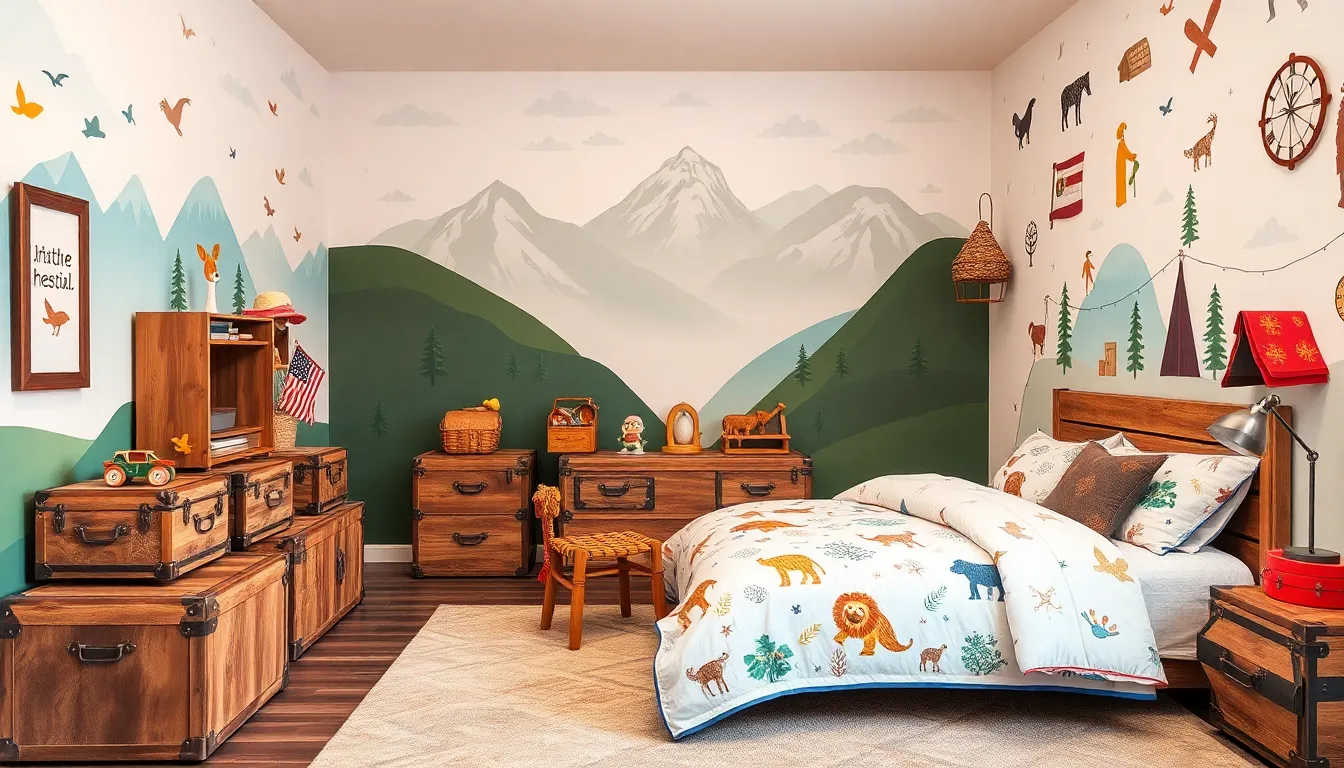
Decorating a child’s room offers a multitude of possibilities. Popular themes inspire creativity and fun for both children and parents.
Adventure And Exploration
Adventure and exploration themes ignite curiosity. Maps, animal prints, and safari motifs encourage wide-ranging imagination. Mountains painted on walls create a backdrop for adventures in imagination. Bedding featuring explorers or outdoor scenes complements this theme. Incorporating storage solutions like trunks or bins promotes organization, ensuring toys are easily accessible. Wall decals of compasses or tents add excitement, enhancing the adventurous spirit of the room.
Fantasy And Fairytales
Fantasy and fairytales transport children to magical realms. Fairy tale characters and whimsical elements spark delightful storytelling. Murals depicting castles or enchanted forests invite play and daydreaming. Bedding that showcases beloved characters fosters a sense of connection. Plush toys and fairy lights enhance the dreamy ambiance, creating a cozy haven. Incorporating a reading nook with fairy tale books supports imaginative exploration while encouraging literacy.
Educational Themes
Educational themes promote learning through visual engagement. Alphabet patterns and number graphics stimulate cognitive development. Walls adorned with maps introduce geography in an exciting way. Craft stations with art supplies encourage creative expression. Incorporating interactive elements like magnetic letters cultivates hands-on learning experiences. Furniture that supports study and creativity facilitates a productive environment, balancing play and education.
Choosing The Right Colors
Selecting colors for a child’s room significantly influences the atmosphere and overall vibe of the space. Color choices can affect mood, creativity, and comfort.
Impact Of Color Psychology
Color psychology plays a critical role in creating a positive environment. Warm colors, such as red and yellow, can evoke excitement and energy. Conversely, cool colors like blue and green promote calmness and relaxation. Studies indicate that colors can also impact focus, with softer hues enhancing concentration. Many designers recommend using vibrant shades for play areas while opting for muted tones in rest zones to balance energy and tranquility. Personal preferences should guide color selections, ensuring the child feels connected to the space.
Tips For Selecting A Color Palette
Choosing a cohesive color palette simplifies the decorating process. Start by picking a primary color that resonates with the child’s personality. Next, select two to three complementary colors to create harmony. Consider incorporating patterns through bedding or wall art for added visual interest. Keeping it simple encourages coordination while fostering creativity. Using color swatches can help visualize combinations before making final decisions. Engaging children in the selection process empowers them and personalizes their environment.
Essential Elements Of Kids Room Décor
Creating a captivating kids’ room involves various essential elements that enhance both functionality and aesthetics. Consider how each component contributes to a vibrant atmosphere, combining comfort and creativity.
Furniture And Storage Solutions
Practical furniture forms the backbone of any kids’ room. Items such as beds, desks, and chairs must cater to children’s needs. Multi-functional pieces, like a bed with built-in storage, maximize space. Bookshelves or cubbies organize toys and books, promoting tidiness. Rounded edges on furniture increase safety during playtime. Adjustable desks accommodate growth, ensuring longevity. Choose durable materials that withstand daily wear, maintaining a cheerful environment.
Wall Décor And Artwork
Inviting wall décor ignites imagination and personality. Brightly colored wallpaper or decals featuring favorite characters transform plain walls into exciting canvases. Art displays showcasing children’s creations instill pride and a sense of ownership. Furthermore, interactive elements like chalkboards encourage creativity and engagement. Gallery walls with framed pictures create visual interest and warmth. Incorporating themed art reinforces the room’s decor concept, immersing kids in their chosen adventures.
Textiles And Soft Furnishings
Comfortable textiles enhance the overall cozy feel. Soft bedding invites restful sleep, while vibrant rugs provide a playful space on the floor. Incorporating various textures through cushions and throws adds visual depth. Personalizable elements, like monogrammed pillows, make the room uniquely theirs. Additionally, curtains should blend functionality and style, controlling light and privacy. Select materials that are easy to clean, ensuring the room remains inviting and enjoyable.
Conclusion
Transforming a child’s room into a vibrant haven is an exciting journey that encourages creativity and personalization. By thoughtfully incorporating elements that reflect a child’s interests and personality, parents can create a space that inspires play and relaxation.
Choosing the right colors and themes plays a crucial role in shaping the atmosphere of the room. Practical furniture and engaging décor not only enhance functionality but also contribute to a sense of belonging.
Ultimately, a well-designed kids’ room serves as a canvas for imagination and growth, fostering an environment where children can thrive and express themselves freely. With a little creativity and attention to detail, parents can craft a magical space that their children will cherish for years to come.